Tue, Sep 1, 2009
One of the things that make Faust so incredible is Schumann’s ability to select precisely those scenes from such a huge drama which illustrate that one aspect of redemption.
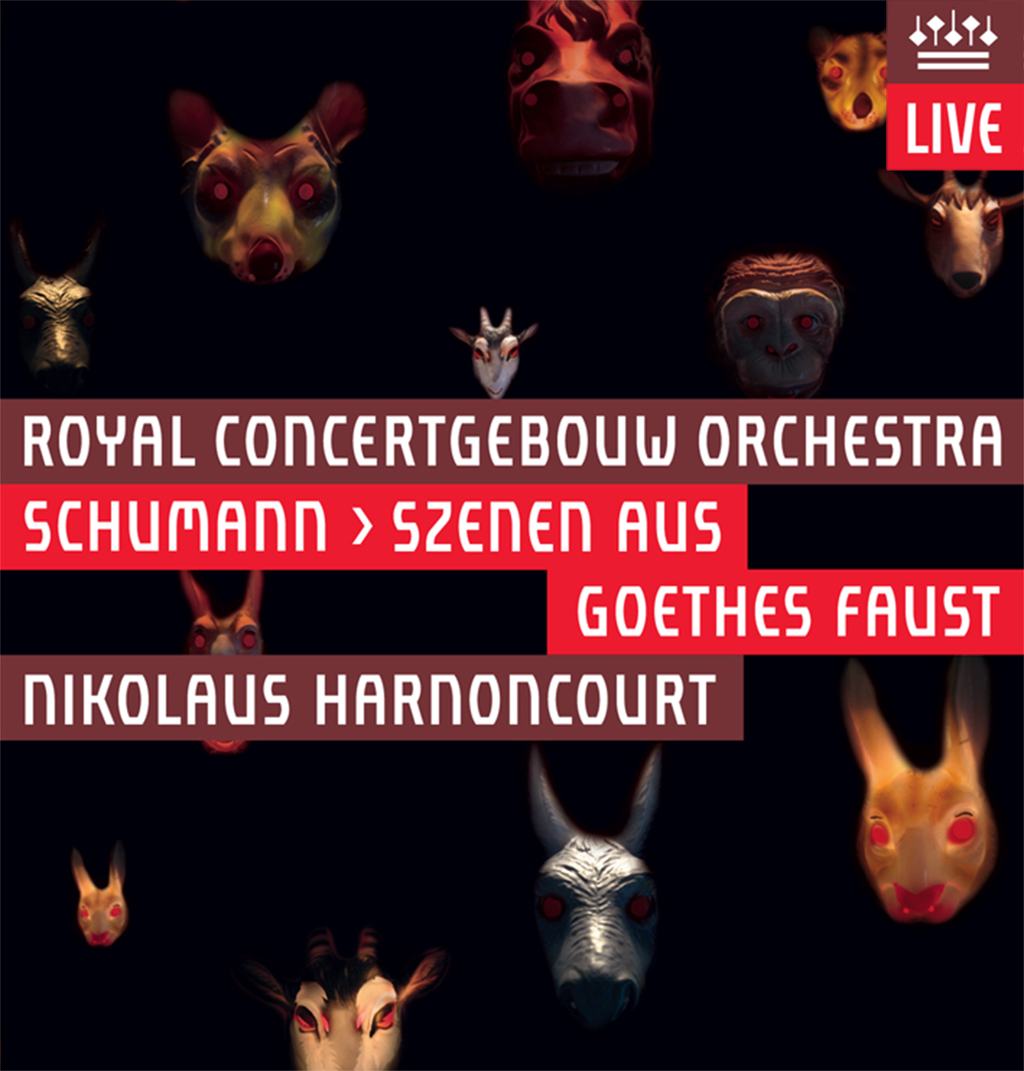
Performers
Nikolaus Harnoncourt, honorary guestconductor
Royal Concertgebouw Orchestra
Christian Gerhaher, baritone
Christiane Iven, soprano
Alastair Miles, bass
Werner Güra, tenor
Mojca Erdmann, soprano
Birgit Remmert, alto
Elisabeth von Magnus, alto
Franz-Josef Selig, bass
chorus soloists
Anitra Jellema, soprano
Anjolet Rotteveel, alto
Kevin Doss, tenor
Netherlands Radio Choir
chorus master Simon Halsey
assistant chorus master Gijs Leenaars
Netherlands Children’s Choir
chorus master Wilma ten Wolde
Nikolaus Harnoncourt
on Schumanns Faust-Szenen
‘When I think of Schumann, I picture him at the cafe in Dresden where he would meet Wagner and Mendelssohn every week. They were about the same age, and all three were from Saxony. Luckily for Wagner’s reputation, both the others died young; had they lived longer, simultaneously with Wagner, music history would have been very different indeed.’
‘I consider Schumann the greatest genius of the three – Wagner’s genius was not primarily musical, but theatrical. Except for Genoveva, Schumann wrote no operas. He did compose a number of half-oratorio works, including the Faust-Szenen. But it’s not an opera, and I believe it should never be staged. As far as what an oratorio actually is – whether it’s spiritual or secular – listeners should make up their own minds and not have someone else’s view forced on them.’
‘Schumann wanted to focus on one specific aspect of Faust – Verklärung (redemption or glorification) and chose the scenes he set based on that aim. And he didn’t change a single word of the text he set. Each is Goethe’s own.’
Playlist
Robert Schumann - Szenen aus Goethes ‘Faust’ (1844-53)
CD 1
| 01. | Ouverture | 8:17 |
| Erste Abteilung | ||||
|---|---|---|---|---|
| 02. | Szene im Garten Du kantest mich, o kleiner Engel, wieder | 5:07 | ||
| 03. | Gretchen vor dem Bild der Mater dolorosa Ach neige, Du Schmerzensreiche | 4:40 | ||
| 04. | Szene im Dom Wie anders, Gretchen, war dir’s | 7:15 | ||
| Zweite Abteilung | ||||
|---|---|---|---|---|
| 05. | Ariel. Sonnenaufgang Die ihr dies Haupt umschwebt im luft’gen Kreise | 7:26 | ||
| 06. | Täler grünen, Hügel Schwellen | 4:03 | ||
| 07. | Des Lebens Pulse schlagen frisch lebendig | 4:08 | ||
| 08. | So ist es also, wenn ein sehnend Hoffen | 4:11 | ||
| 09. | Mitternacht Ich heisse der Mangel | 2:12 | ||
| 10. | “Vier sah ich kommen, drei nur gehn” | 8:59 | ||
| 11 | “Die Nacht scheint tiefer tief hereinzudringen” | 2:32 | ||
| 12. | Fausts Tod - Herbei, herbei! Herein, herein! | 13:57 | ||
| 05. | Ariel. Sonnenaufgang Die ihr dies Haupt umschwebt im luft’gen Kreise | 7:26 | ||
| 06. | Täler grünen, Hügel Schwellen | 4:03 | ||
CD 2
| Dritte Abteilung Fausts Verklärung | ||||
|---|---|---|---|---|
| 01. | I “Waldung, sie schwankt heran” | 3:35 | ||
| 02. | II “Ewiger Wonnebrand” | 1:45 | ||
| 03. | III “Wie Felsenabgrund mir zu Füssen” | 3:10 | ||
| 04. | “Welch ein Morgenwölkchen schwebet” | 3:03 | ||
| 05. | IV “Gerettet ist das Edle Glied” | 6:33 | ||
| 06. | “Gerettet ist das Edle Glied” (bis) | 3:57 | ||
| 07. | V “Hier ist die Aussicht frei” | 5:02 | ||
| 08. | VI “Dir, der Unberührbaren” | 9:01 | ||
| 09. | Chorus Mysticus VII “Alles vergängliche ist nur ein Gleichnis” | 9:25 | ||
| Speelduur CD 1 | 72:56 | |||
| Speelduur CD 2 | 45:34 | |||