Mon, Aug 3, 2026
On 3 October, the Royal Concertgebouw Orchestra will perform Beethoven’s Ninth Symphony at the Ziggo Dome during Classics Live. Considered the Mount Everest of music, a symbol of peace and unity, it’s been a hit heard round the world for two hundred years. And this time, you can sing along with this iconic masterpiece! What makes this music so remarkable?
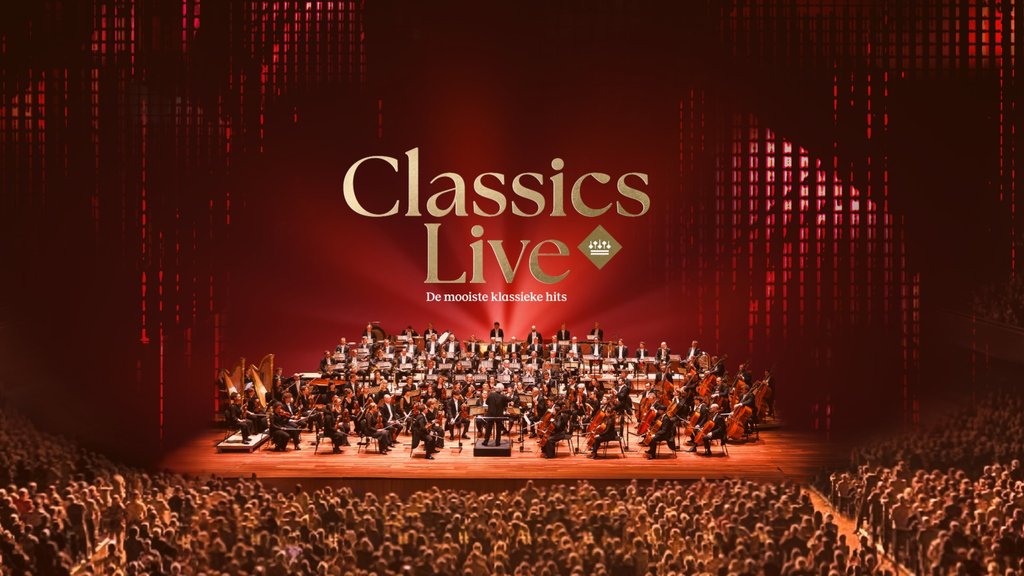
Beethoven’s nine symphonies are among the best that the classical music repertoire has to offer, and the Ninth is the jewel in the crown. It’s not only music experts who consider ‘Beethoven’s Ninth’ the Mount Everest of music: for two hundred years, it’s also been a favourite with audiences. Its powerful message of peace, joy and equality is shared by the orchestra plus a massive choir and four vocal soloists. It’s like a big musical embrace that brings people together and connects them. ‘Alle Menschen werden Brüder’!
The unheard triumph
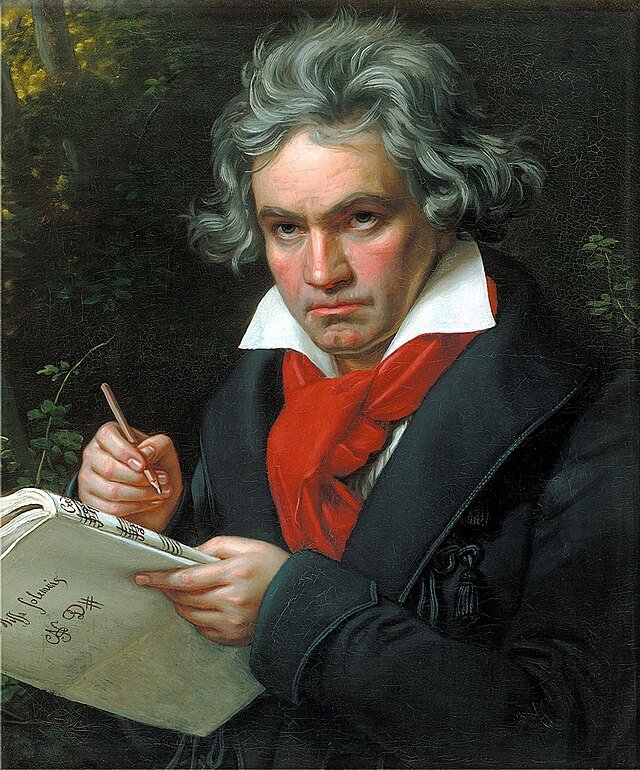
Besides being profoundly deaf while he was writing the symphony, Beethoven had also been struggling financially. His music often has to do with overcoming pain and setbacks, such as his deafness, which is especially difficult for a composer. Beethoven’s music has a fighting spirit; the worse things were going for him, the more joyful his music sounded.
The Vienna public knew it too. At the premiere on 7 May 1824, the composer was allowed to conduct the piece ‘for show’. The orchestra was actually following a conductor standing next to him named Michael Umlauf. When the piece ended, the audience burst into thunderous applause and cheering, but Beethoven, standing with his back to the audience, could hear none of it. Only when one of the soloists turned him around to face them did he realise how deeply his music had touched the hearts of the people there.
The audience had gone crazy. Their cheering for the composer got so wild that the police were called in to clear the hall.
Musical symbol
The piece’s exuberant choral finale quickly found its way into the collective consciousness. During the First World War, it became the musical symbol of unity. Since then, it has been used at the Olympic Games (for the teams from the reunified former East and West Germany) and during popular uprisings in Chile, China, and other countries. In 1985, it became Europe’s official folk song. There are arrangements for guitar, recorder, choir and heavy-metal band, and of course it can be downloaded as a ringtone.
In Japan, singing and playing Daiku (‘Number nine’) together has been a favourite New year’s tradition for more than a hundred years. The tradition took on a new meaning in Osaka after the tsunami on 11 March 2011. ‘The disaster taught us that we have to help each other,’ said one of the 10,000 Daiku performers in December 2011. ‘That’s what this song evokes for me.’
Want to find out more?
Why did Beethoven take 30 years to write this symphony? How did he finally manage to finish it? What made the music so revolutionary for its time? And how did the score come to be divided in three parts, and why were they only put back together in 1989? Read it all here.
Giving the world a kiss
Beethoven took nearly 30 years to complete his masterpiece. In 1795 he had read Friedrich Schiller’s poem An die Freude for the first time. As well as an ‘ode to joy’, it’s a vision of a future in which everyone is equal and happy. It is also about the power of singing together: when we sing with other people, we naturally feel connected to them, and we allow ourselves to be embraced by joy. It’s like giving the world a kiss.
Beethoven, ever the idealist, was eager to give the poem musical expression. After making numerous attempts, by 1822 he had come to the conclusion that it would have to be the finale of a large-scale symphony. But the symphony was a purely instrumental form at the time. He would have to flout a few conventions. For the final movement, he added a choir and vocal soloists to the orchestra – the first time ever in a symphony. The way Beethoven interweaves the vocal lines with the orchestra in this movement is as innovative as it is simply brilliant. First, he brings back themes from the first three movements, and then, as the music seems to run aground, the baritone suddenly interrupts, urging us to ‘stop these ugly sounds’. Instead, ‘let’s sing in praise of joy!’ And then the finale begins. A symphony becomes drama.
Innovations
A lot of revolutionary things happen before the baritone even opens his mouth. Just listen to the beginning of the first movement: melodies arise almost out of nothing, as if we’re hearing the earth’s very creation. Decades later, Anton Bruckner and Gustav Mahler would do something similar. The symphony’s length was also unprecedented in 1824, at over an hour. And it has enormous contrasts: never before had there been such huge differences between loud and soft, and between intimate and majestic. The orchestra itself was larger than ever before, with an important part for the horns – four of them (another break with the traditional two). The finale, over twenty minutes long, is really a kind of symphony within a symphony, its four movements flowing from one to the next.
Fault lines and puzzle pieces
When Beethoven died in 1827, he left a treasure trove of handwritten music manuscripts, including the original manuscript of the Ninth. When the Second World War broke out, the manuscript was taken in three sections to three secret locations, in order to limit any damage from bombing. After the war was over, these places were separated by strict borders. The first three movements were hidden in Poland for years and were thought to have been lost, while the beginning of the last movement was in Communist-ruled East Berlin and the rest of it, including the finale, was in West Germany.
The sections of the manuscript were reunited in 1989 after the fall of the Berlin Wall. An official statement from the State Library in Berlin put it aptly: ‘The Berlin Wall cut through the Ninth Symphony as a monument to the Cold War, an image of truly stifling symbolism: the cut went straight through the double fugue in the last movement, the climax, precisely where Beethoven’s counterpoint interweaves the two musical and poetic main themes – joy and world-wide unity – contrapuntally, and we finally hear them sounding at the same time.’
Fault lines that can divide both the world and music, after which a reunion can take place, which is expressed in the music itself: it is remarkable how the music and the world are interwoven in all kinds of ways in Beethoven’s Ninth Symphony.
Sing along!
Would you like to sing along in the final? If so, you can prepare using our rehearsal materials (Dutch only). On this page, you’ll find an introductory video featuring Iván Fischer, vocal technique exercises and instructions for finding out what type of voice you have. You’ll be able to get going yourself and practice your part at home.