Mon, May 4, 2026
Sol Gabetta is getting ready to play Bohuslav Martinů’s Cello Concerto No. 1 with the Royal Concertgebouw Orchestra on 13 May and 15 May. This is music that can only be played at a high level, music that demands precision. ‘There’s no aspect of the cello that Martinů doesn’t exploit. This concerto’s got everything!’
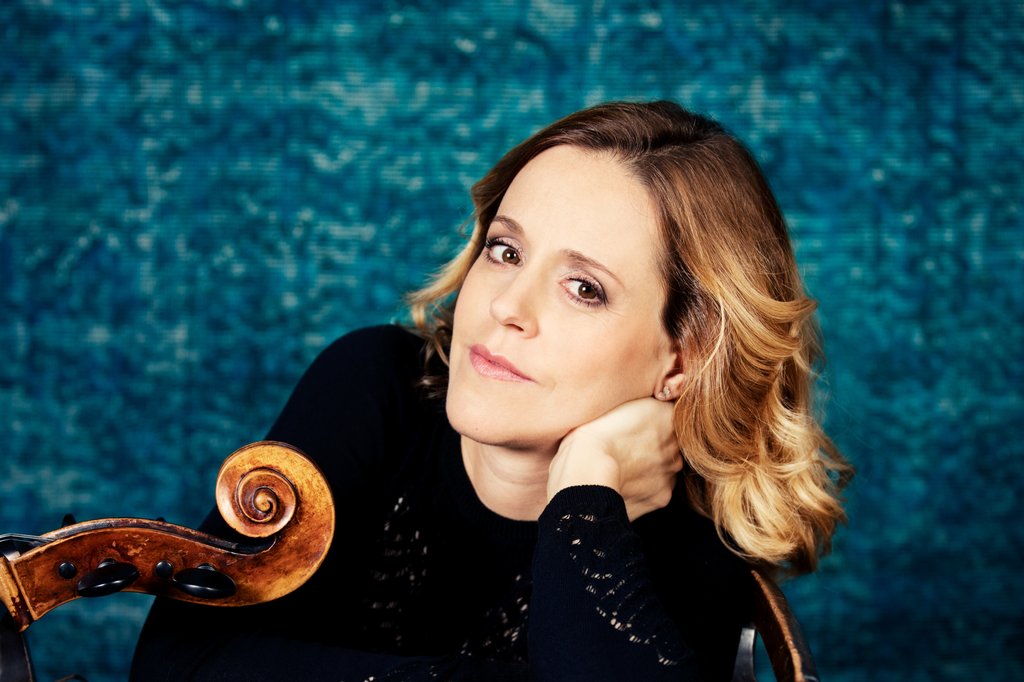
By Frederike Berntsen - this interview appeared in Preludium, the music magazine of The Concertgebouw and the Royal Concertgebouw Orchestra.
Speaking from Geneva on Zoom, she’s feeling bright and cheery: cellist Sol Gabetta is a waterfall of enthusiasm. All the more so when we talk about Martinů’s First Cello Concerto, which is in her diary with the Concertgebouw Orchestra conducted by Santtu-Matias Rouvali. ‘Martinů has to be performed at the highest level – this music demands precision, rhythmic perfection.’
Gabetta was invited to play Martinů (‘the orchestra and conductor don’t matter for the time being’) for the first time as her career was just beginning, around twenty-five years ago. She listened to a recording and wasn’t so sure she would like it. But when you’re just starting out, you say ‘yes’ to everything. ‘And what do you think happened? I started practising the concerto and I thought it was fantastic. It has everything in it! It’s interesting musically and technically. There’s no aspect of the cello that Martinů doesn’t exploit. This concerto is the best way to show what the instrument can do. The great romantic pieces, which I adore, are wonderful of course. But they don’t pull out all the stops like this one does.
‘Martinů might be best described as Europe’s Charles Ives.’ Gabetta is thinking out loud. ‘Martinů represents European folklore, and of course in particular the sounds of his native country, now the Czech Republic, the melodies and harmonies. What I found fascinating was that after I’d played the Martinů, when I came back to Dvořák’s Cello Concerto, which I also love to play, I heard completely different accents in it. Dvořák was also from that region. I’d promptly added a little dash of modernism to his work. It’s all in the details, of course.’
I’ve arrived at a point where I don’t want to make compromises anymore
She has a different attitude towards those great cello concertos than she used to, Gabetta informs us. She feels more confident now, and dares to do more. That comes from experience, and from trusting your own opinions and interpretation. ‘If I do even one single phrase from a concerto just a bit differently than I did before, because I’ve picked it up from other repertoire, I’m happy. That’s also the fun with being a performer, surprising the audience by making a little change that they aren’t expecting.’
Gabetta continues. ‘I think I’m honest when I’m playing.’ Honest with regard to the composer, the music, yourself? ‘If you’re talking with someone and you look that person in the eyes, you know if they’re just making up a nice story to charm you. I used to make up nice stories too when I was younger. You play with it, trying to find out how that works, making connections with other people.
‘I’ve arrived at a point where I don’t want to make compromises anymore. I don’t mean refusing to go along with things – after all, you want to interact as peacefully as possible with people, your loved ones. I’m trying to find out how we did that as children. Children are honest, because they don’t know any better, they haven’t been ‘ruined’ by the world. They still have that lovely naiveté!
‘We all change during our lifetimes, but the challenge is not to lose your identity. And empathy is an important part of that. I think that in the last few years, I’ve got more empathy. I can understand better why people act the way they do. And on stage you show people all those different characters, in a huge range of music. We all unite multiple personalities in ourselves.’
The sound of the Concertgebouw Orchestra has something sunny and light
Gabetta speaks openly, including about the Concertgebouw Orchestra, with whom the Argentinian-born cellist has played sixteen concerts so far. She’s overjoyed when one of these concert series is coming up. ‘I’m also trying to make sure we see each other more often. I knew some of the musicians before they joined the orchestra. As a student I was in the same cello class with [now] principal cellist Tatjana Vassiljeva, and I’d rehearse at her place, while I was drifting around Berlin without a room of my own. I’ve also known the principal oboist Alexei Ogrintchouk for a very long time.
‘An orchestra with such good chamber musicians is unusual. This is not a normal orchestra.’ What does she mean by that? ‘The sound quality. It’s incredible and it really appeals to me. These musicians’ ensemble playing is subtle and nuanced. The sound also has something sunny and light about it. Orchestras in, say, Northern Germany have a darker sound.’
Gabetta should know, since her name and fame have taken her all over the world. She plays music from the Baroque period to contemporary, both as a soloist and as a chamber player. She’s also the enthusiastic artistic director of her own Solsberg Festival in Switzerland. ‘Choosing to be more honest has also made me more relaxed on stage and I enjoy performing more and more. But I’m not just sitting there playing honest music. Music has a deeper structure, you have to penetrate through to that, then find the freedom to perform it. Finding that magic during a concert, and using it to show what’s unique about you, is the challenge for me.’