Wed, Feb 4, 2026
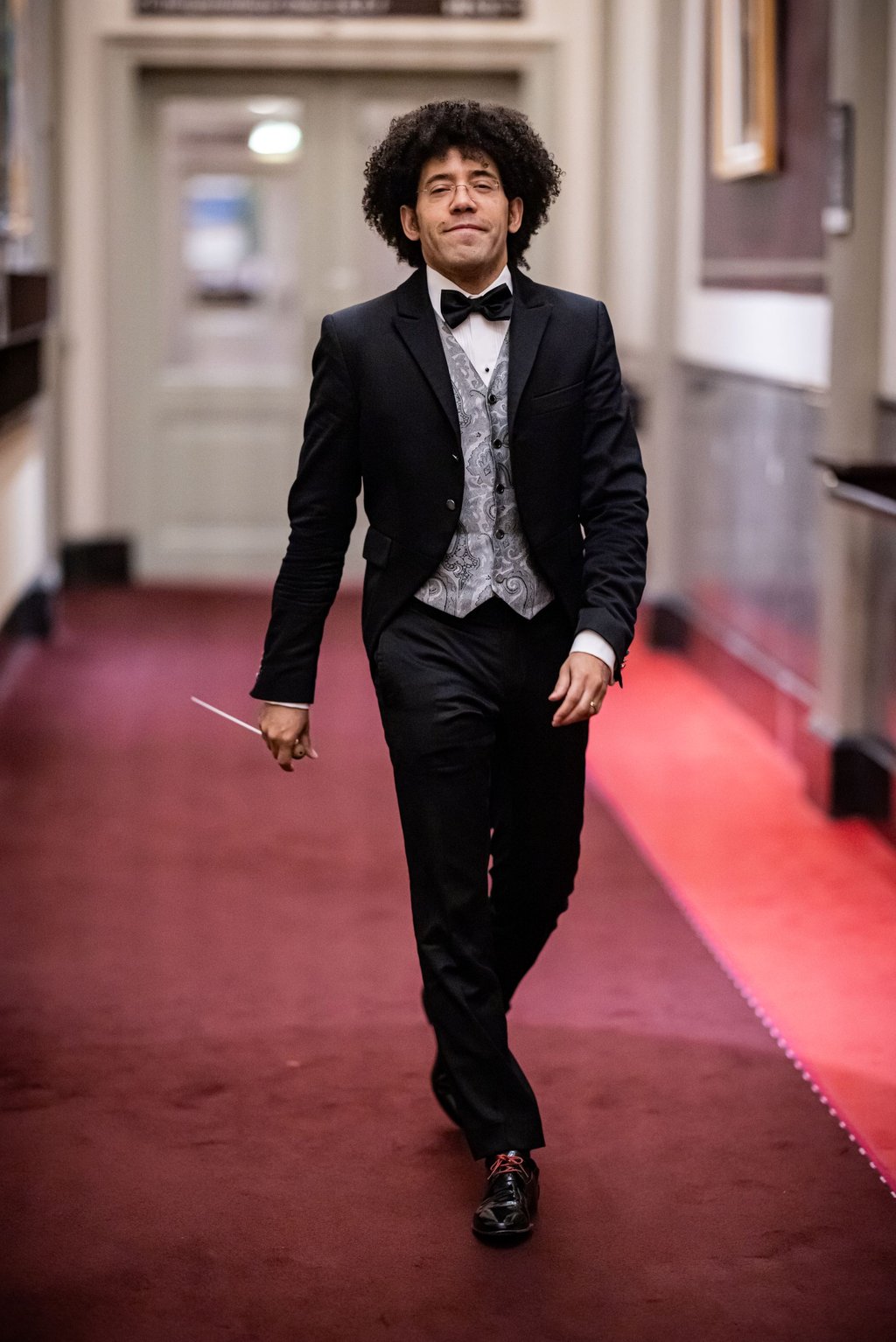
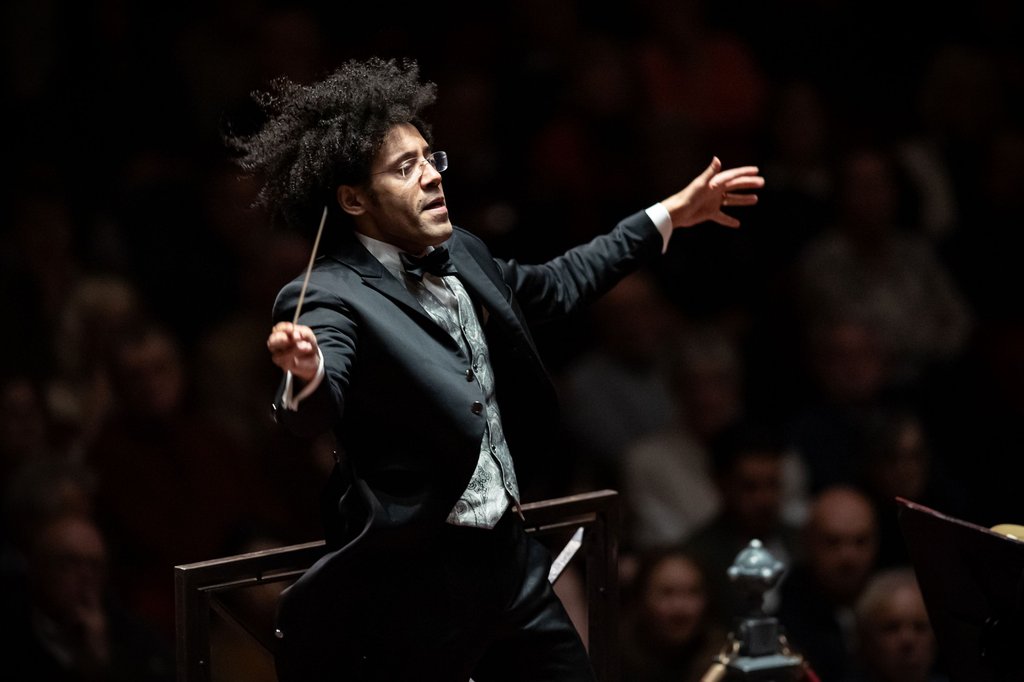
Join us as the sensational conductor Rafael Payare from Venezuela makes his debut with our orchestra! On 18, 19 and 20 February, he will conduct a programme centred on Shostakovich's Tenth Symphony. In an interview with Preludium, he talks about his musical journey.

By Carine Alders - This article was published (in Dutch) in Preludium, the magazine of the Concertgebouw Orchestra and The Concertgebouw.
It all started in Venezuela in the 1990s. ‘I’m the youngest of five and the brother just above me played the bassoon. But he’s eight years older and that was his thing, so I didn’t pay attention. Until one day when I was thirteen, I heard this beautiful music coming from his room. “You like it?” he said. “I’ll take you along to the orchestra tomorrow.” The conductor of the local El Sistema orchestra [El Sistema is Venezuela’s national youth music programme, founded by José Antonio Abreu in 1975.] was Antoine Duhamel, who was also the teacher of the brass section. They didn’t have enough horns, so he gave me this beautiful, shiny instrument and said, “Try blowing on this.” And that’s how I started playing the horn.’
‘Then one day he asked me to come by, and I didn’t understand why. I told my brother, and he said, “You’re lying, that can’t be true”. So we went to Antoine together, and he repeated that I was expected there the next day. It turned out to be a day of auditions for the orchestra. I didn’t even know what an audition was, I’d only been playing for three weeks. When they asked me what I was going to play I said, “What do you mean? I only know how to play one scale”. Well, then I had to play that. That was on Saturday and on Monday I attended my first orchestra rehearsal. We played the slow movement from Beethoven’s Fifth Symphony. For this piece you have to transpose, but I had no idea what that meant or how it worked. Someone from Caracas was conducting and Antoine sat next to me to explain to me what I had to do. “In this piece, this note here is a G.” I protested, having just learned it was a C. This was in February 1994, just before my fourteenth birthday.’
What’s this?
‘That was my first introduction to classical music. In Venezuela there were no special radio stations for classical music. None of my school friends played music. In December that year I played in the national youth orchestra for the first time. Three times a year we would have a music week with a concert, in Caracas. My musical family kept growing and that’s where I first met Gustavo [Dudamel, the first conductor from El Sistema to become world famous.]. In 1995 we had our first tour to the United States, playing at the Kennedy Centre and for the United Nations. I was fifteen by then and was about to go to university, but I loved the orchestra so much that I decided to postpone my studies for a while and focus on music. With the youth orchestra it was always quite a challenge for the conductor to keep everyone on board when the tempo changed. “Guys, pay attention now,” he would call out. But then one time Giuseppe Sinopoli came to conduct, and led us in playing Wagner’s ‘Rienzi’ Overture. He couldn’t speak Spanish, but the sound of the orchestra transformed in a heartbeat. Then we played the last movement of Mahler’s First Symphony. Everywhere where the music had to be played ritardando [gradually slower] or rubato [rhythmically free] it would always become messy, but with Sinopoli things went perfectly. I thought wow, what’s this? I want to do that too, when my hair has turned white. But first my aim was to become the best horn player in Venezuela.’
Conducting became my path
And he did: in 2001 Rafael Payare became principal horn of the Simón Bolívar Symphony Orchestra. ‘Back then we played with the Simón Bolívar Brass Quintet in various cities in the country. One day I went to see maestro José Antonio Abreu, the founder of El Sistema. I wanted to play as a soloist and was eager to discuss that with him. He started talking about conducting, and how there are certain skills that you have within you, that can’t be learned. And you know, maestro Abreu is a wise man, so I let him say his piece, I planned to talk about my solos afterwards. He said I had it in me to make people play for me, that conducting would be my path in music. And he would show me the way. Then the penny dropped and everything fell into place. I couldn’t sleep all week. All the music I had ever played was running through my head. After a week, I went back to him and said, “Maestro, it’s so strange. I’m hearing all this music in my head, but I don’t have any scores.” He started laughing and sent me to the library. And that’s how I began taking conducting lessons with Abreu. All the lessons you normally take across three or four years, I was given in half a year. I was still playing in the Simón Bolívar Symphony Orchestra as principal horn and would occasionally conduct the brass section. Sometimes, when Gustavo was stuck in traffic in Caracas, he would ask me to start up the orchestra rehearsal.’
Training ground
‘A very cool thing about the El Sistema orchestras is that children have no idea what the music should sound like. In a professional orchestra, the musicians play softly when it says piano, even if you, the conductor, accidentally make a movement to make the orchestra play loudly. These children are a perfect mirror, all your mistakes are immediately flung in your face. I’m really lucky that I had such a good training ground. I began to conduct more and more El Sistema orchestras around the country and I grew as a conductor, step by step, until in 2012 I was accepted into the Malko Competition For Young Conductors [of the Danish National Symphony Orchestra]. I was allowed to compete, but our orchestra was scheduled to play in The Concertgebouw for the first time in June and I had an important horn part in Richard Strauss’s Eine Alpensinfonie, so I couldn’t afford too many distractions. My goal was to get through the first round, then the organisation would pay for my hotel and I could stay to experience the entire competition. Then, to my surprise, I ended up winning the competition. After that, everything happened so quickly that the concert in Amsterdam became one of my very last concerts as a horn player.’
Shostakovich as an old friend
Since that concert in June 2012, Payare has returned to Amsterdam several times as a conductor, including in November 2024 with his own Orchestre symphonique de Montréal, where he has been chief conductor since the 2022/2023 season. And now he is making his debut with the Royal Concertgebouw Orchestra in a special programme. ‘I find this a great honour. I know the history of the orchestra with Willem Mengelberg and Gustav Mahler. In Venezuela you couldn’t find many recordings, but when we toured with the Simón Bolívar Symphony Orchestra, the first thing we did in every city was run to a CD store. A small group of us would made a pact: “If you buy this in Vienna, I’ll buy that in Berlin”. And then we’d listen and exchanged opinions.’ Dmitri Shostakovich’s Tenth Symphony is like an old friend to Payare. You can search the recording of the Simón Bolívar Symphony Orchestra at the BBC Proms in 2007 on YouTube and still see Payare as a horn player. “It’s one of the works I always go back to, especially for a debut that might be the beginning of a long-term relationship with an orchestra.”
He got to know Sofia Gubaidulina’s Fairy Tale Poem around 2015. ‘I loved it straight away, it’s very intense music. When you first look at the score you think “what is this?!” and then you enter this wonderful world. As with Shostakovich, there is this mask, you are never sure whether you’re hearing what you think you’re hearing. I was also delighted that the artistic direction of the Concertgebouw Orchestra suggested asking Frank Peter Zimmermann as soloist. When we played Johannes Brahms’ Violin Concerto together in Montreal, he suggested we put Frank Martin’s on the programme in Amsterdam. The last notes of Gubaidulina’s multi-coloured fairy tale, fading away, serve as a beautiful segue to Martin.
Brilliant acoustics
Payare is conducting Martin’s Violin Concerto for the first time, and the Concertgebouw Orchestra has not performed this piece since 1967. ‘When it comes to new works in my repertoire, I like to compare the process I go through to preparing food. First, I look for the general lines and themes and then I put it to one side to let it marinate. After a month I pick it up again for a deep-delving analysis. Just like with marinating, when you add herbs and let it rest, it may seem like nothing is happening, but meanwhile the food is absorbing the flavour of the herbs.’ The conductor is very much looking forward to making music in the special acoustics of the Main Hall. ‘It’s normal when you’re on tour to do a sound check in each new venue, but with the Simón Bolívar Symphony Orchestra in 2012 we played the entire programme in the afternoon and again in the evening, everyone was enjoying it so much. You can really experience how the hall reacts to your sound, you can feel how you’re able to take just a little more risk and how you’re able to hear the most subtle nuances. And now I will have the opportunity to conduct the Concertgebouw Orchestra, an orchestra which is perfectly at home in these acoustics – what a wonderful prospect!’