Tue, Jun 23, 2026
For those unfamiliar with the subscription series of the Concertgebouw Orchestra, the letter system may seem quite a puzzle. What do the letters A, B, D, E, S, or indeed Z, stand for? And what, you might well wonder, became of the letter C? Time to investigate the rich history of our subscription alphabet.
By Annelieke Tillema - this article appeared in Preludium, the monthly magazine of The Concertgebouw and the Royal Concertgebouw Orchestra.
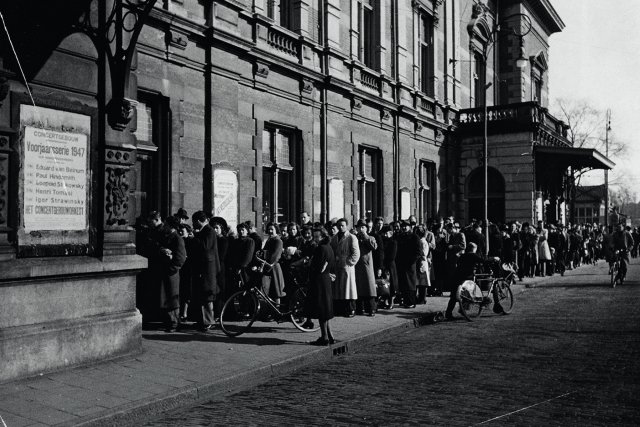
“The attendants have closed the doors. And whilst in the auditorium the tension mounts as the conductor raises his baton for the opening bars of Hendrik Andriessen’s Fourth Symphony, at the entrance the booking office staff exchange contented glances; every subscriber is properly seated.” Thus opens a Volkskrant newspaper article from 1955 concerning the “great demand for season tickets” to the Concertgebouw Orchestra.
Since its founding in 1888, the orchestra presented “subscription concerts” on Thursday evenings. For the sum of 30 guilders, a subscriber gained entry to all performances. Series as we know them today did not yet exist. In the 1901-02 season we find the first mention of A and B series, which at that time comprised “extraordinary subscription concerts” – performances rendered notable by the appearance of a guest soloist.
The 1908-09 season was divided into a winter and a summer season, with the summer concerts taking place partly in the gardens of The Concertgebouw. The winter season was partitioned into anA series of 45 concerts, two B series on Thursday evenings, and a C series on Sunday afternoons, each consisting of 10 concerts; the D series served as a passe-partout for all 65 performances.
In the decades that followed, the arrangement of these series was regularly overhauled. In the 1922-23 season, the total number of subscription concerts was reduced to 40. Five years later, the Sunday afternoon concerts were for the first time incorporated into the Z series.
By the 1935-36 season, things had finally settled down. In an arrangement lasting up until the 1990s, the subscription concerts were split between the series B on Thursday evenings, and C and Z on Sunday afternoons. The A series was the ultimate package for the most broad-minded music lovers, covering around thirty performances a season.
The seating plan is diligently marked with blue crosses until every single seat is taken
On 10 October 1945, the first subscription season following the Second World War commenced. Public interest was so immense that it was decided to repeat the Thursday evening B-concert on Wednesday evenings. This was the beginning of the Wednesday B and Thursday B series (known then as Series B1 and B2, with B1 denoting the popular Thursday evening series).
The subscription season
How did ticket sales proceed in those days? The 1955 Volkskrant article gives us an excellent overview. The 15th of March marked the annual opening of the subscription season. Prospective subscribers would head to the box office to secure their series, which had to be paid for in advance. For the A series, comprising 29 concerts, they paid the sum of 84 guilders. Series B1 and B2, with 16 concerts each, cost 60 guilders. The five-concert C series cost 16 guilders, whilst the Z series of 8 concerts was priced at 22 guilders.
As proof of payment, the subscriber was issued with a numbered receipt. A copy of this document, noting the applicant’s choices, was duly placed upon a waiting list. From there, it fell to the staff of the booking office to allocate the seats, balancing the needs of shareholders, renewing subscribers, and newcomers. “A difficult task for the booking office, who, with the seating plan of the Main Hall before them, must somehow find a resolution.”
The number of available seats depended upon the size of the orchestra – 2,500 for a small ensemble, 2,350 for a large orchestra. “The administration must therefore take this into account as well, and the seating plan is diligently marked with blue crosses, until every single seat is taken.’ Anyone left on the waiting list without seats received a full refund. Better luck next year...
“The C series: What to do with it?”
By the dawn of the 1960s, the Concertgebouw Orchestra was looking for ways to broaden its repertoire. Enter composer-conductor Pierre Boulez, who in 1965 spearheaded an experimental concert featuring avant-garde works by Peter Schat, Jan van Vlijmen, and Anton Webern. In a delightfully playful twist, audience members were handed ballots during the intermission to vote on which piece they wanted to hear a second time. The format was such a runaway success that the 1965-66 season presented three similar concerts, programmed as ‘Contemporary Music’.
Up until that point, convention dictated that contemporary pieces be mixed in with standard repertoire. But by the 1966-67 season, the orchestra dedicated its C series wholly to twentieth-century music. They also debuted two ambitious new series: the E series, featuring ‘New music, most often featuring unusual Instruments,’ and the V series, reserved for ‘Vocal music.’ Both additions proved to be ahead of their time, however, and were not, ultimately, included in the programme.
Want to read more about the Concertgebouw Orchestra?
Preludium is the magazine for classical music lovers. Have a look
From ‘C for Chagrin’ to ‘P for Pleasure'
The C series survived, undergoing a series of radical makeovers over the next decades – evolving from a rather eclectic pairing of Baroque and avant-garde music to a lineup that adopted a “Picasso formula,” showcasing a vibrant, sweeping palette of twentieth-century works. For a period, the orchestra even outsourced a portion of the C series’ dates to specialised guest ensembles.
As critic Erik Voermans wryly observed in Het Parool in 1990: “And the million-dollar question remains: the C series, what on earth do we do with it?” In his view, the orchestra was missing a beat there. “Such a shame, because in theory, the C series has enormous potential. As enormous, to be precise, as the ever-growing mountain of newly mint scores that rarely, if ever, get to see a conductor's music stand.”
By 1994, the orchestra removed the series from the schedule entirely. In its place arose a premiere series, boasting either a world premiere or a Dutch debut in every single programme. The orchestra had successfully traded “the C of chagrin for the P of pleasure,” as Voermans neatly put it. Another chic addition to the lineup? The T series – for Theme.
Old flames and new additions
The D series, which began life as a mere passe-partout, made a triumphant comeback for the 1986-87 season, reimagined as a curated highlights package, repeating a selection of performances from the chronically sold-out B and Z series for a wider audience. Two years later, the letter E also made its glamorous return to the subscription alphabet – this time as a coveted lineup of Friday evening concerts helmed by the most legendary conductors of the day.
By the 1998-99 season, Series P and T were seamlessly merged to resurrect the A series – yet another old flame of the subscription roster – dedicated to pioneering contemporary and twentieth-century repertoire. This series later doubled with the thematic spectacles known as AAA, subsequently named Horizon, which saw the orchestra collaborate with a network of important cultural institutions.
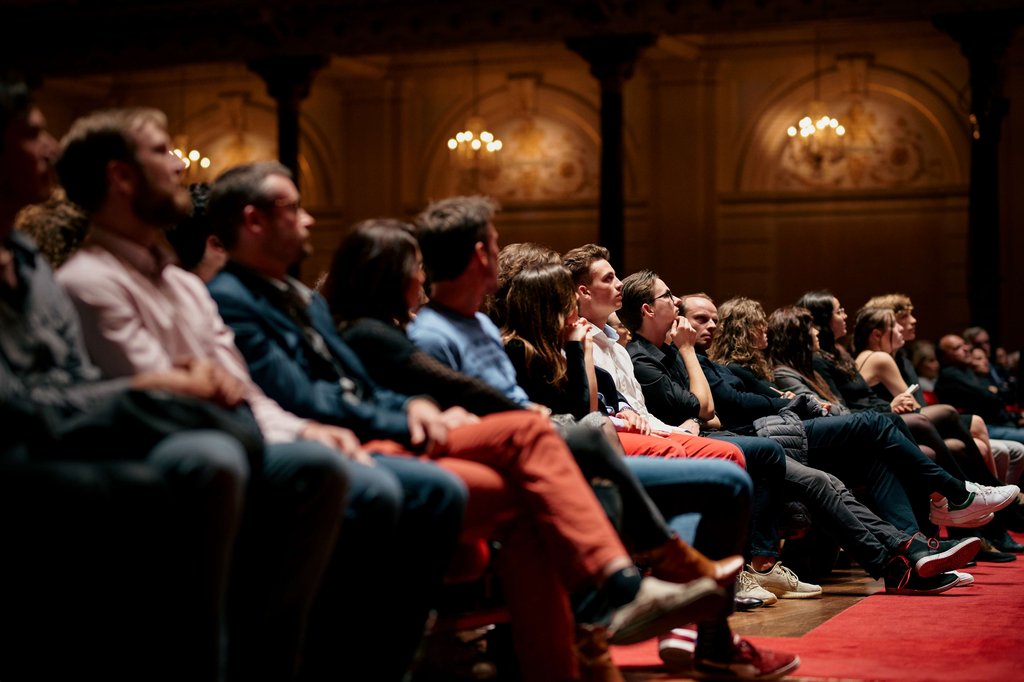
And the latest addition to the social calendar is the Essentials series (also known as the S series), debuting in the 2014-15 season. It is a tightly edited run of three to six compact concerts, each spotlighting a single masterpiece. Designed to draw in an audience less familiar with the symphonic world, these evenings kick off with a TOM Talk by the charismatic Flemish broadcaster Thomas Vanderveken, followed by a delightfully buzzy post-concert cocktail hour in the Mirror Hall.
And now?
Some 125 years after the very first packages made their debut, the A, B, D, E, S, and Z series remain the absolute backbone of the Concertgebouw Orchestra’s subscription season. True to tradition, contemporary pieces still provocatively rub shoulders with the classical canon in the B, E, and Z series. The A series continues to deliver three adventurous nights, each boasting a world or Dutch premiere, while the D series serves up a curated selection of symphonic highlights. Meanwhile, Essentials continues to seduce an entirely new crowd of concertgoers year after year.
Naturally, the box office team has long since retired the blue pencils – the vast majority of subscribers now lock in their seats online. Yet, the staff remains as fiercely dedicated as ever to securing everyone their desired seats. And when September finally rolls around, they can still be found looking on with quiet satisfaction: every subscriber in their rightful place.
Always in flux
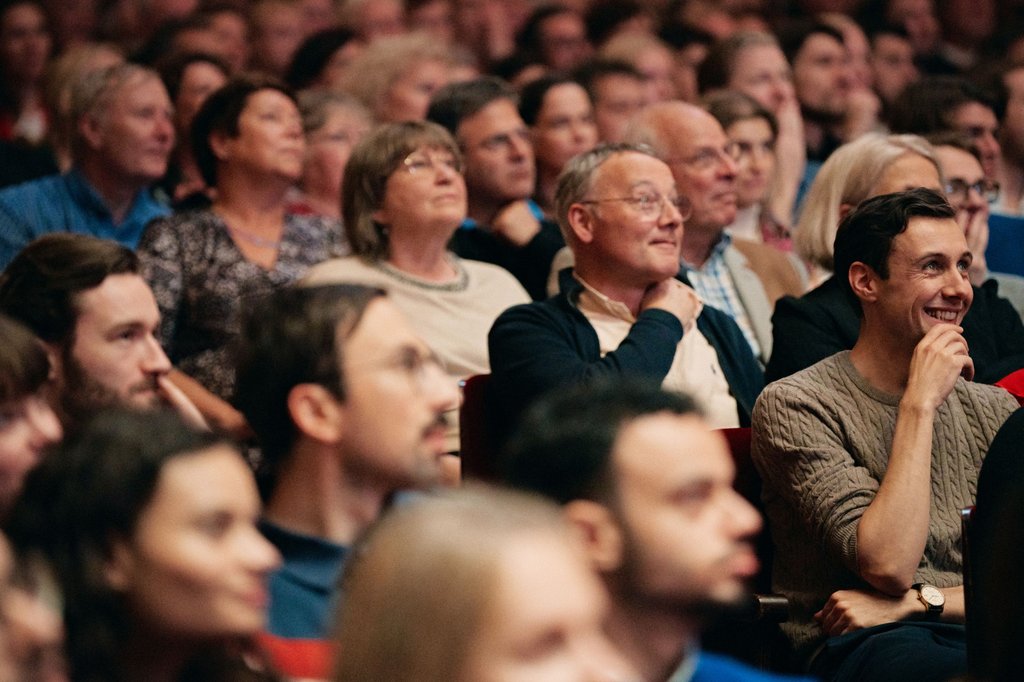
Artistic evolutions, shifting audience expectations, and broader financial considerations ensure that the Concertgebouw Orchestra’s subscription structure remains in a state of perpetual flux. For instance, the Essentials series was recently expanded from four to six performances, while E and Z stepped up from eight to ten dates for the 2025-26 season. Meanwhile, the Wednesday B and Thursday B series are now offered as completely distinct packages, owing to their increasingly distinct characters.
Looking ahead to the upcoming season, the E series will slim down to eight concerts, while D expands to a generous nine. As for the A series, it was gradually scaled back from six to three concerts between 2022 and 2024 – a deliberate move as twentiethth- and twenty-first-century works become increasingly integrated into the programmes of the orchestra's other series. For the modern concertgoer looking to customise their calendar, the orchestra now offers “add-on” packages across the board (including one especially for the A series), alongside the option to separately book Extra Concerts.
Would you like to know which concerts are included in which series next season? Go to the series overview or take a look at the 2026-27 season brochure (in Dutch).